
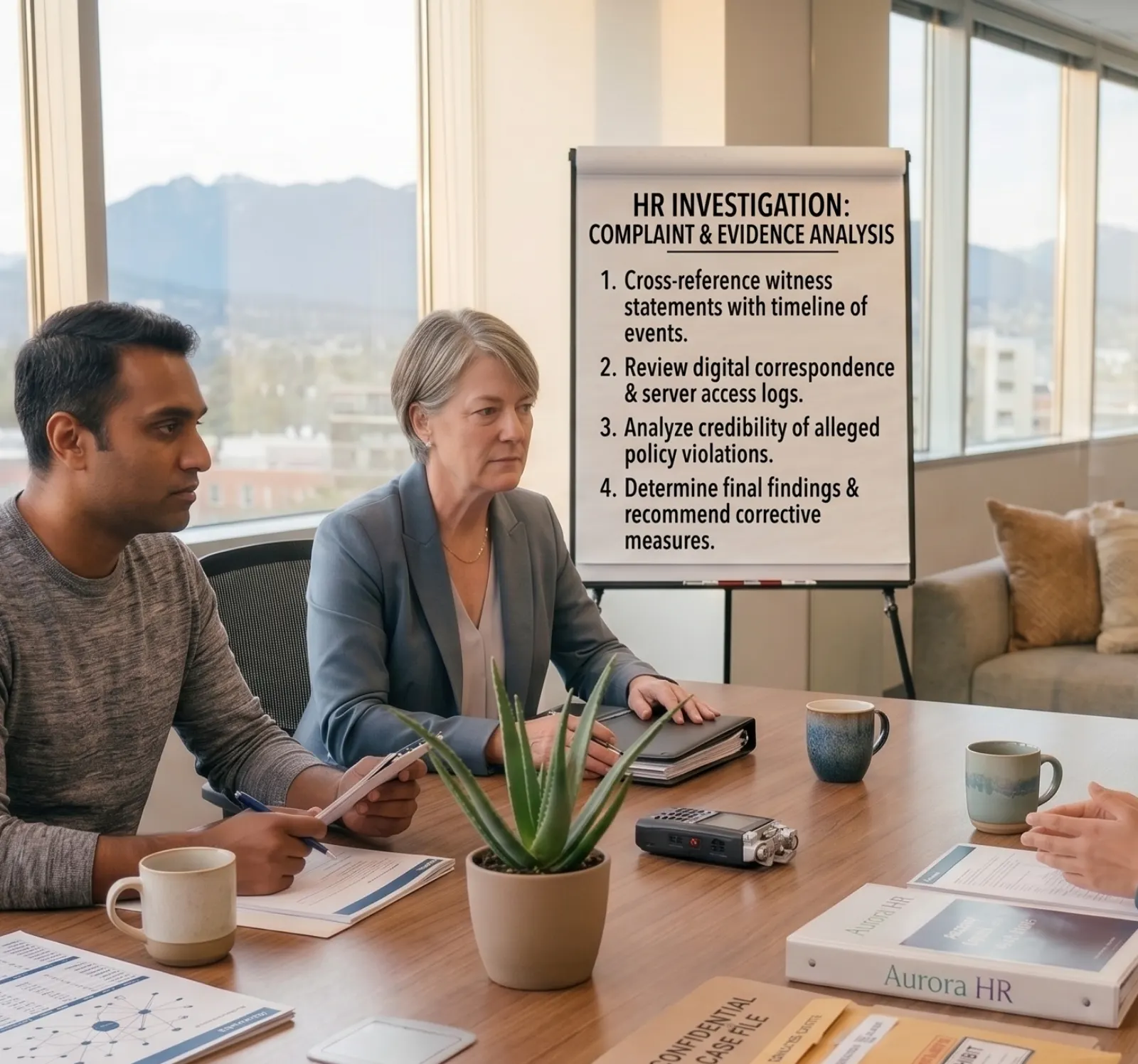
Respectful Workplace Training
A two-day toolkit for conflict, complaints & investigations
Doing nothing is a decision — with a cost. Give your managers a process they can use on Monday.
Overview
A staff member asks to speak with their manager privately. Voice low, they describe weeks of being belittled in front of clients — then add, “please keep this just between us.”
What the manager says in the next five minutes can protect that person and the organization, or quietly compromise both. Most managers have never been taught what to do here. Leading Respectful Workplaces fixes that.
Over two days, your people-leaders learn one repeatable way to handle the full spectrum — from everyday friction to a formal complaint. They get a single six-step process for resolving conflict early and fairly, the emotional-intelligence skills conflict really tests, how to tell bullying, harassment, and discrimination apart from reasonable management action, exactly what to do in the first hours after a complaint lands, and how to support a fair investigation without compromising it.
It was built from what managers actually asked for: a clear process they can reach for in the moment, realistic scenarios instead of generic case studies, and time to practise rather than just listen. Roughly half of the eight hours is hands-on. One instinct runs through all of it — act early, stay fair, focus on the issue, not the person — and managers don’t need to become lawyers or investigators to use it.
Who it is for
Every people-leader, whatever the title — supervisors, team leads, coordinators, managers, and senior managers.
Anyone who manages conflict, or who may be the first person a concern is raised with.
No prior training needed — mixed levels of experience are an asset in the room.
Especially valuable if you want to prevent harassment complaints before they start, or if you have managers who freeze — or over-react — when conflict or a complaint lands.
At a glance: Two days · 8 hours · 11 modules · ~half hands-on practice · customised to your policies
Work conflict resolution training: what they’ll learn
Day 1 · Foundations
Read a room before it turns into a complaint
Where respect actually lives day to day, why the manager sits on the front line of employee relations, the legal duty to keep a workplace psychologically safe — and why acting early, instead of avoiding, is what keeps small issues small.
A conflict process managers can use on Monday
The emotional-intelligence skills conflict really tests — staying regulated with Pause → Name → Choose — and one six-step procedure for resolving any conflict: assess severity, create a safe space, identify the issue, find a solution, agree commitments, follow up. Practised in guided role-play and a scenario lab.
Day 2 · When it gets serious
Tell serious conduct apart from reasonable management
The WorkSafeBC bullying-and-harassment test — impact, not intent — the bright line that fair feedback and normal direction are not bullying, and when harassment crosses into discrimination under the BC Human Rights Code.
Handle the first hours after a complaint lands
What to do, and what not to do, when a concern reaches you: confidentiality and its limits, interim measures, supporting the person, avoiding the over-promise trap, and knowing when to escalate. Receive and route — don’t investigate and resolve.
Support a fair investigation without compromising it
Hold discipline conversations that hold up
Performance, corrective-counselling, and discipline conversations that are timely, specific, documented, and fair — the same behaviour-not-character discipline, applied to accountability.
Across both days · Policy
Know which of your policies applies — and reach for it
Program structure: two days, four hours each (eight hours total, roughly half of it practice), across eleven modules. Day 1 is foundations (the manager's role, conflict, emotional intelligence, the six-step process); Day 2 is when it gets serious (harassment, complaints, investigations, and fair performance, counselling, and discipline). The same instinct runs through both — act early, stay fair, focus on the issue not the person.
What your managers will be able to do
- Set the tone for a respectful, psychologically safe team. —
Understand their role and legal duties, and act early so small issues stay small instead of becoming complaints.
- Resolve everyday conflict before it festers. —
Use one repeatable six-step process that protects both the outcome and the relationship.
- Stay calm and keep conflict on the issue. —
Use core emotional-intelligence skills to regulate themselves and focus on the problem, not the person.
- Recognise when something has crossed a line. —
Tell everyday conflict apart from bullying, harassment, or discrimination using the WorkSafeBC and BC Human Rights Code tests — and apart from reasonable management action.
- Handle a complaint correctly in the first hours. —
Manage confidentiality and interim measures, support the person, avoid over-promising, and know when to escalate.
- Protect a fair investigation and a fair discipline record. —
Safeguard procedural fairness, and hold performance and discipline conversations that are documented and defensible.
See it before you book.
Get the program overview and a sample activity your managers would actually run. No form wall.
Download the free overviewWhy it holds up
Two things make it stick. First, it was built from what managers actually asked for — more practice, the emotional-intelligence skills conflict really tests, real scenarios, and tools they can keep at their desk — not from a generic template. Second, it’s grounded in real law: WorkSafeBC’s bullying-and-harassment requirements and the BC Human Rights Code, where a mental disorder caused by workplace bullying or harassment can be a compensable injury and employers, supervisors, and workers share the duty to prevent it. Half the program is hands-on, on realistic, de-identified scenarios — so managers leave with judgment they can use under pressure, not definitions they recite.
Delivery
Two days, four hours each — delivered flexibly: in person, fully virtual, or hybrid, across BC. Half the time is active practice: role-plays, a scenario lab, and a capstone that runs a single situation from everyday friction all the way to a formal complaint. Customised to your policies and context.
Frequently Asked Questions
Part of our Organizational Learning & Development (L&D) Consulting practice.
Senior HR Leadership and Execution
Working Style
Practical, scenario-based learning — half the program is hands-on practice on real situations.
Best Fit
You want to prevent harassment complaints before they start, not just react to them.
You have capable managers who still freeze — or over-react — the moment conflict or a complaint arrives.
You need every manager giving the same fair, confident first response, not five different ones.
Highly Credentialed HR Partner
Our team holds some of Canada's and North America's most respected senior credentials in human resources, strategic people leadership, and workplace advisory.





A direct conversation with a senior HR consultant — no sales pitch, no pressure.
Related Insights
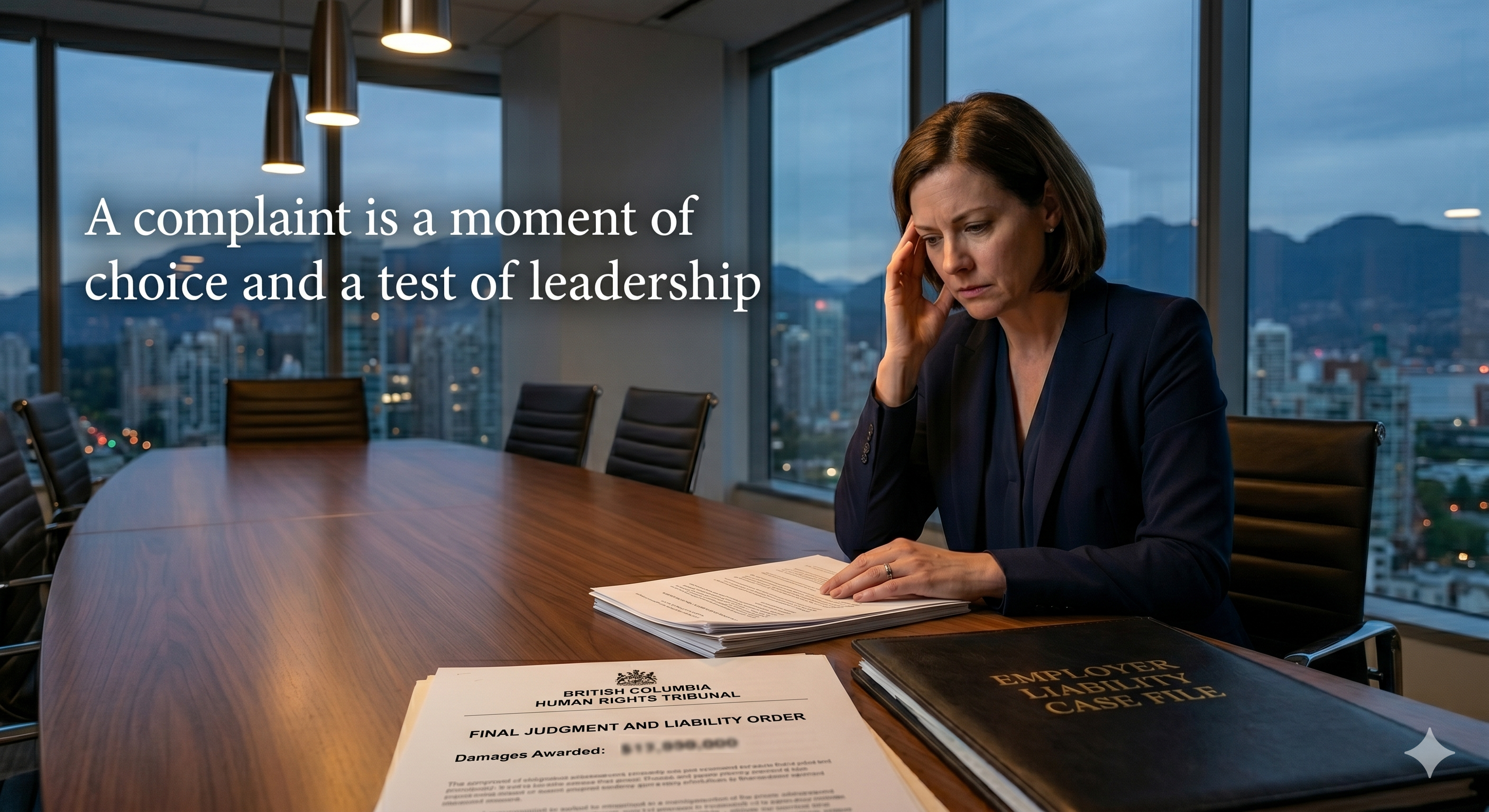
Ignoring Workplace Harassment Is Condoning It: The Cost of Inaction
A weak response to a harassment complaint does not show caution or neutrality. In two BC cases, inaction cost the employer, and one manager personally.

What Every New People Leader in BC Needs to Know
New people leaders are handed the hardest parts of management with no training. Here is what they actually need to know across the employee lifecycle.

Performance Improvement Plans: The PIP Nobody Wants to Start
How BC employers can use PIPs as a structured, legally defensible path to support success.
Related Solutions

Organizational Learning & Development (L&D) Consulting
Training that changes behavior, not just checks boxes. We design learning experiences that build real capability—from BC employment law compliance to leadership excellence.

Workplace Investigations & Conflict Resolution
When workplace complaints arise, how you respond matters. We conduct neutral, trauma-informed investigations that protect all parties and withstand legal scrutiny.
HR Policy Development & Compliance Consulting in BC
Compliance is the floor, not the ceiling. We help you build people-first policies that meet BC legal requirements while reflecting your organizational values and culture. Good policies communicate values, set expectations, and create fairness.

Give your managers a process for the hard moments.
Book a 45-minute fit call and we'll map the program to the situations your managers are facing.