
DEI Consulting for Inclusive Workplaces
Move beyond performative statements. Build genuine inclusion grounded in everyday practice — for values-driven BC employers.
Do your DEI statements reflect what people actually experience at work? Many organizations make DEI commitments, form committees, and celebrate heritage months, but inclusion is proven in our everyday decisions and actions.
Good intentions are not enough. Inclusion is proven in everyday decisions and actions.
How leaders listen, how they behave, and whether they build an environment of trust.
How decisions are made regarding hiring, advancement, and opportunities.
Whether people truly experience fairness, safety, belonging, and respect.
We help organizations move from performative language to measurable change. That includes reviewing workplace practices, strengthening policies, and helping leaders build a culture where people feel respected, heard, and able to contribute.
Intent. Action. Culture.
With pay transparency reporting now reshaping expectations in BC, DEI is no longer only a values conversation. It is also an operational leadership issue.
Inclusion becomes real when leadership behaviour, workplace practices, and accountability start to change.
We help organizations prepare by reviewing pay practices, strengthening fairness, and building cultures where people want to stay.
This work is hard but gratifying. It requires honesty about where you are, humility about what you do not know, and sustained commitment. If your organization is ready for that journey, we are ready to guide it.
Landscape and Opportunity
Reality Check
People notice when 'culture fit' keeps rewarding sameness rather than diversity in hiring, advancement, and everyday leadership decisions.
The pressure to change is growing, particularly in BC. Legal requirements, human rights legislation, public scrutiny, and employee expectations are all raising the bar. Organizations that treat inclusion as operational leadership — not just messaging — see measurable gains in retention, talent acquisition, and team performance, while reducing the legal, reputational, and cultural risks that come from inaction.
Pay transparency does more than create a reporting requirement. It pushes organizations to examine whether sameness, familiarity, 'culture fit,' or biased decision-making have shaped who is rewarded, developed, and paid fairly.
Cultural safety asks more than whether people feel welcome. It asks whether difference is respected, sameness is more rewarded, the vulnerable are protected, and leadership, policies, and workplace norms reflect reconciliation and foster belonging. For organizations working with or employing Indigenous peoples, this means moving beyond lip-service, and grounding inclusion in reconciliation, community accountability, and the lived realities of Indigenous employees — not treating cultural safety as a checklist or a single training session.
Our Process
Listening & Assessment
We start by listening to lived experience and examining how workplace decisions, norms, and systems operate.
- Conduct workplace equity and inclusion audit
- Assess employee experience and sense of belonging
- Review people systems through an equity lens
- Facilitate confidential listening sessions
- Analyze workforce demographic data
- Summarize baseline findings and priority themes
Listening & Assessment
We start by listening to lived experience and examining how workplace decisions, norms, and systems operate.
- Conduct workplace equity and inclusion audit
- Assess employee experience and sense of belonging
- Review people systems through an equity lens
- Facilitate confidential listening sessions
- Analyze workforce demographic data
- Summarize baseline findings and priority themes
Strategy, Priorities & Roadmap
We translate insight into practical priorities, clear ownership, and realistic next steps.
- Define DEI goals and principles
- Prioritize initiatives based on impact, readiness, and capacity
- Design governance and decision rights
- Set KPIs for hiring, retention, and inclusion
- Conduct pay equity analysis and determine pay transparency readiness
- Review governance and accountability structure
- Inform communication and change messaging
Capability Building & Implementation
We support leaders and teams in building the skills, habits, and accountability that make DEI a day-to-day reality.
- Deliver practical training on inclusivity, bias, and microaggressions
- Build inclusive hiring tools and decision guides
- Update policies and practices to reduce bias
- Develop bias-aware performance and advancement practices
- Set up measurement and accountability
- Put into place accommodation and accessibility practices
- Provide cultural safety training with Indigenous focus
Frequently Asked Questions
Highly Credentialed HR Partner
- Advise leadership teams on building more inclusive and accountable workplace cultures.
- Design policies and leadership practices that strengthen fairness, inclusion, and consistency.
- Align inclusion efforts with organizational strategy, culture, and leadership expectations.
Working Style
Respectful dialogue grounded in practical action.
Best Fit
Organizations strengthening inclusive leadership and accountability
Teams addressing culture, belonging, or representation challenges
Leaders ready to turn inclusion commitments into measurable progress
Highly Credentialed HR Partner
Our team holds some of Canada's and North America's most respected senior credentials in human resources, strategic people leadership, and workplace advisory.





A direct conversation with a senior HR consultant — no sales pitch, no pressure.
What You Walk Away With
Concrete deliverables to build a genuinely inclusive workplace.
DEI Assessment Report
A clear picture of your current state, key themes, and priority areas for action.
DEI Strategy & Roadmap
A practical roadmap with priorities, timelines, accountability, and measurable goals.
Pay Equity Analysis
Analysis of pay patterns, gaps, and fairness issues to support stronger decision-making and pay transparency readiness.
Inclusive Hiring Toolkit
Practical hiring tools that reduce bias and support more inclusive selection decisions.
Capability Building & Training
Targeted learning and training that builds inclusive leadership, stronger team habits, and day-to-day accountability.
Inclusion Accountability Dashboard
A metrics framework for tracking inclusion goals, accountability, and progress over time.
Ongoing Advisory Support
After the initial engagement, we remain available for continued guidance — helping sustain momentum, navigate emerging issues, and keep inclusion embedded in everyday leadership and decision-making.
Ready to Turn Inclusion Commitments Into Real Change?
In one conversation, we will help you assess where your organization stands and identify the most practical first steps.
Related Insights

BC's Gender Pay Gap — 2026 Update: Who is Left Behind
BC's headline gender pay gap is 14.5%. Behind that single number sit gaps nearly double for some groups of women. Here is a fuller picture of why the gap persists, beyond the average.
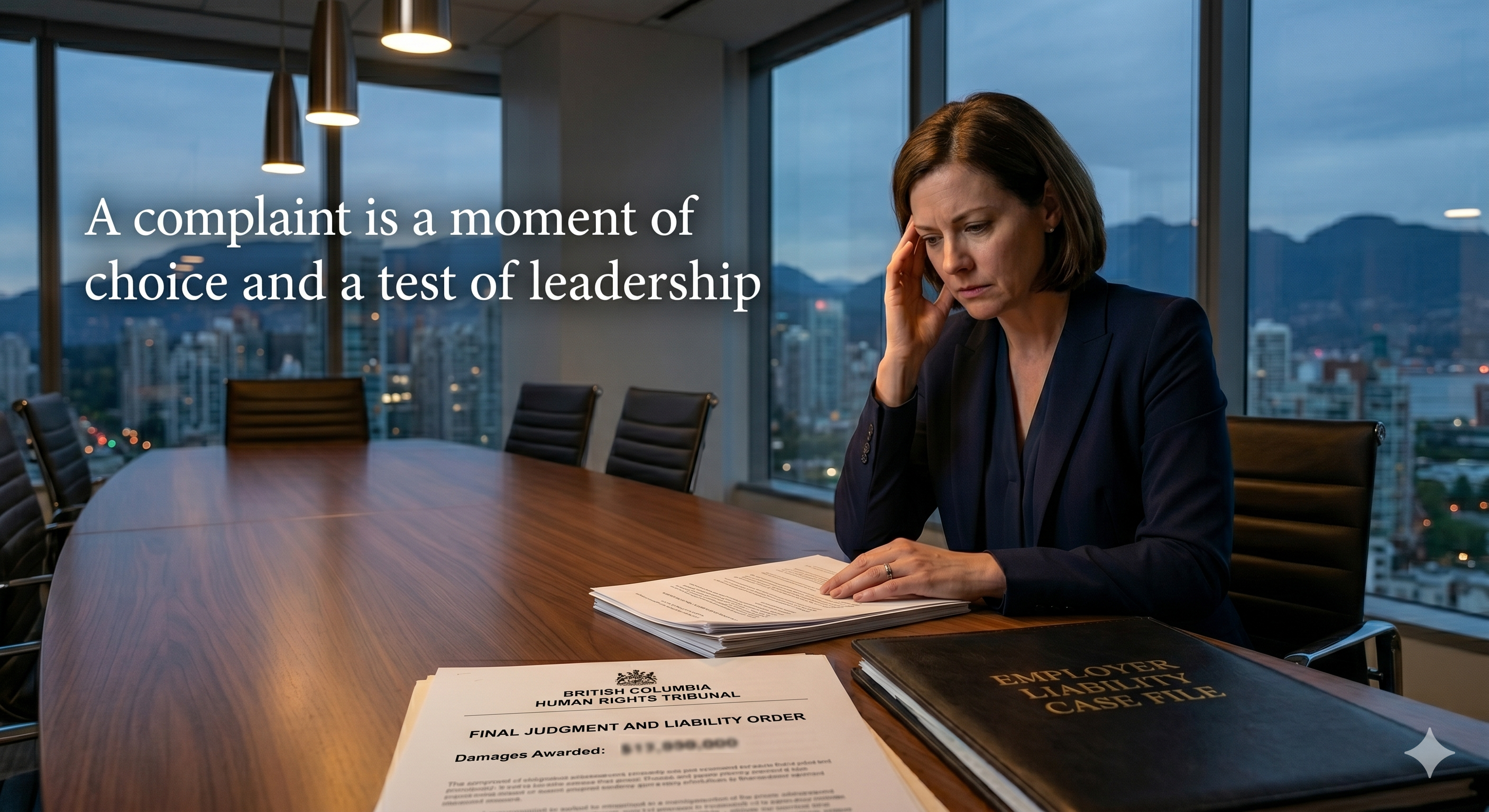
Ignoring Workplace Harassment Is Condoning It: The Cost of Inaction
A weak response to a harassment complaint does not show caution or neutrality. In two BC cases, inaction cost the employer, and one manager personally.

Competency Frameworks That Clarify Expectations
Build a simple competency framework that clarifies expectations and supports growth.